An AR app that turns food waste into a discovery experience
designed from evidence, built with intention.
Project Description
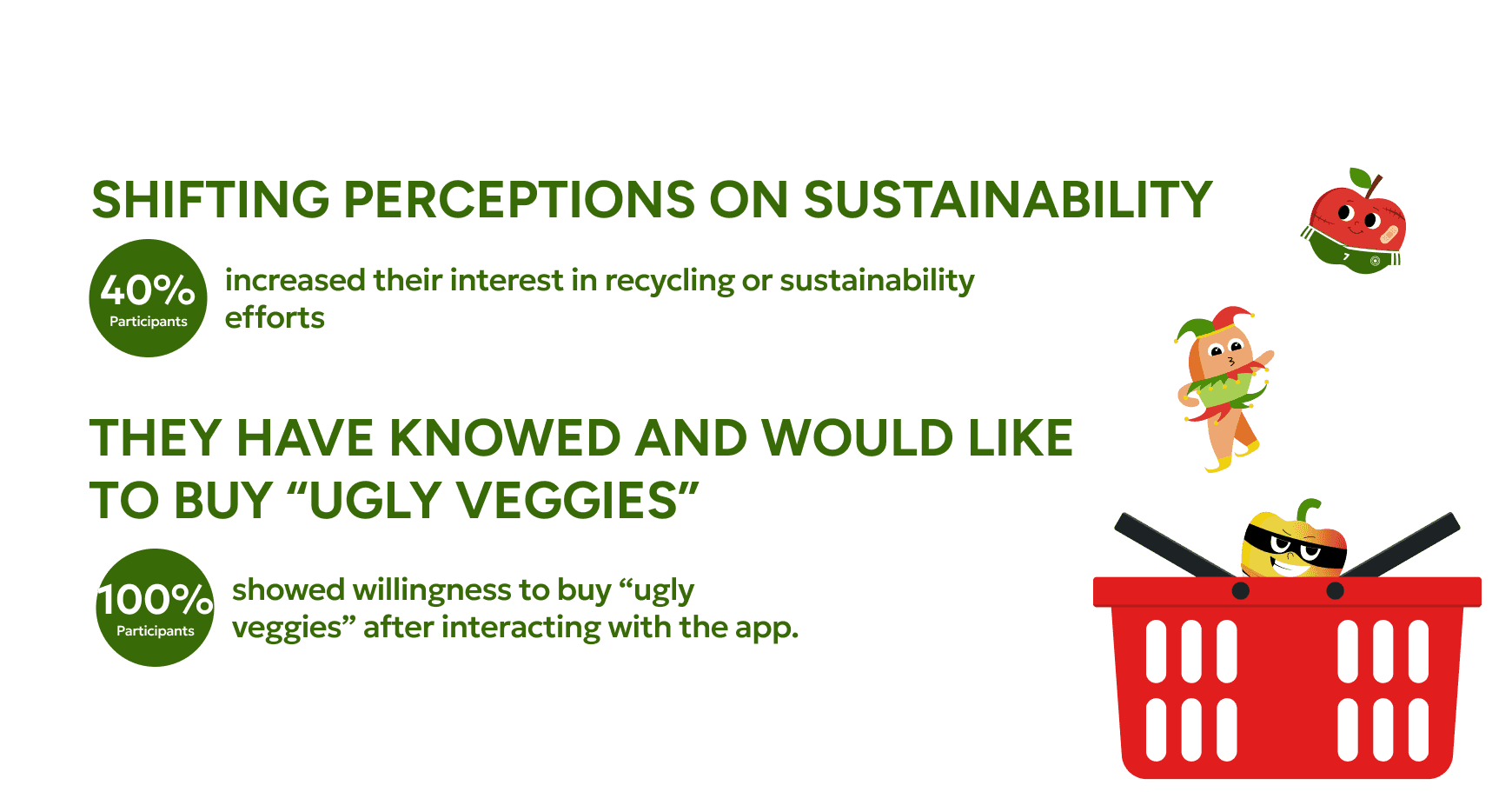
Millions of kilograms of edible vegetables are wasted every year — not because they're unsafe, but because they look imperfect. In the DACH region, we identified a trust gap: consumers weren't indifferent to sustainability, they simply lacked a reason to engage with "ugly" produce. Our challenge was to design that reason.
The goal
To transform these "ugly veggies" from discarded waste into high-value assets by engineering a platform that triggers positive buying behavior and bridges the trust gap between sustainable produce and the modern consumer.
Evaluation beyond intuition- 3 Phases Research
Three phases. One clear direction.
I led all research across the full project lifecycle — from early discovery through final usability evaluation.
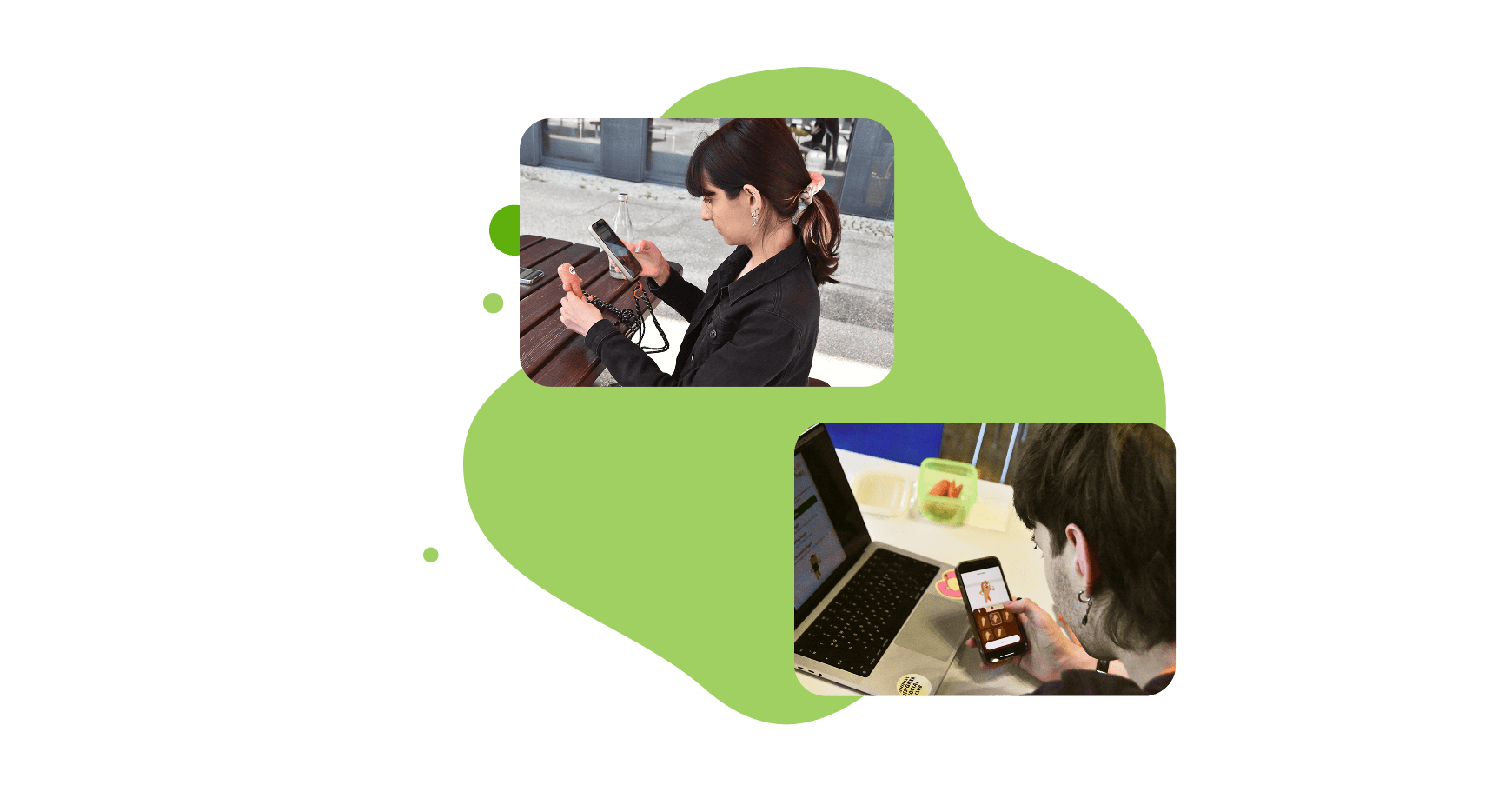
Phase 1 (Discovery)
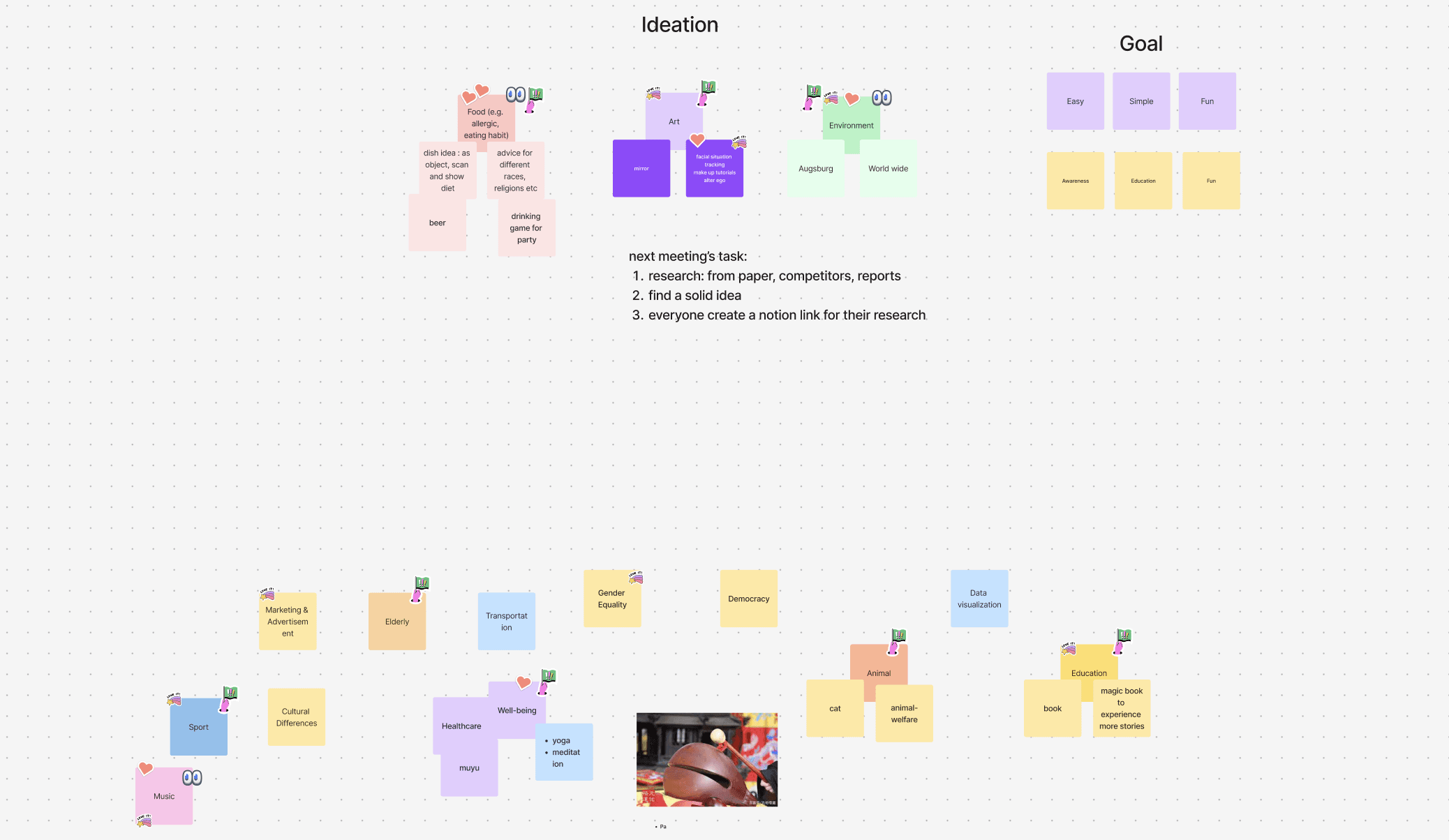
Early-stage discovery to define the core user persona and dietary anxiety points.
Phase 2 (Interaction)
Evaluated navigation models using ProtoPie high-fidelity prototypes to validate interaction logic before development
Phase 3 (Usability Evaluation)
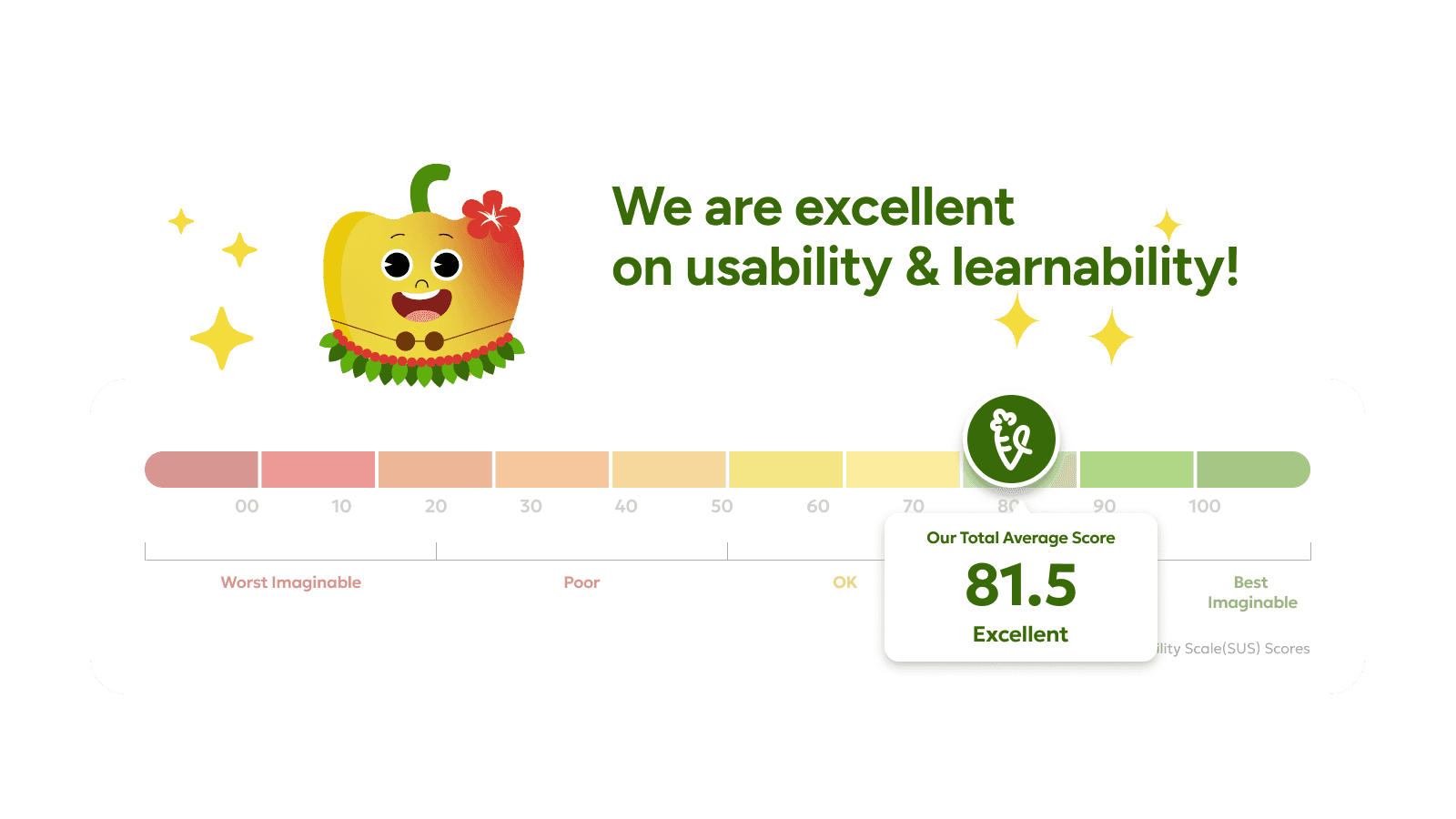
Conducted SUS (System Usability Scale) testing on the final model to quantify usability and ensure the platform met senior-level performance standards
Final SUS score: 81.5
Brand Strategy & Identity
Making sustainability feel like an adventure.
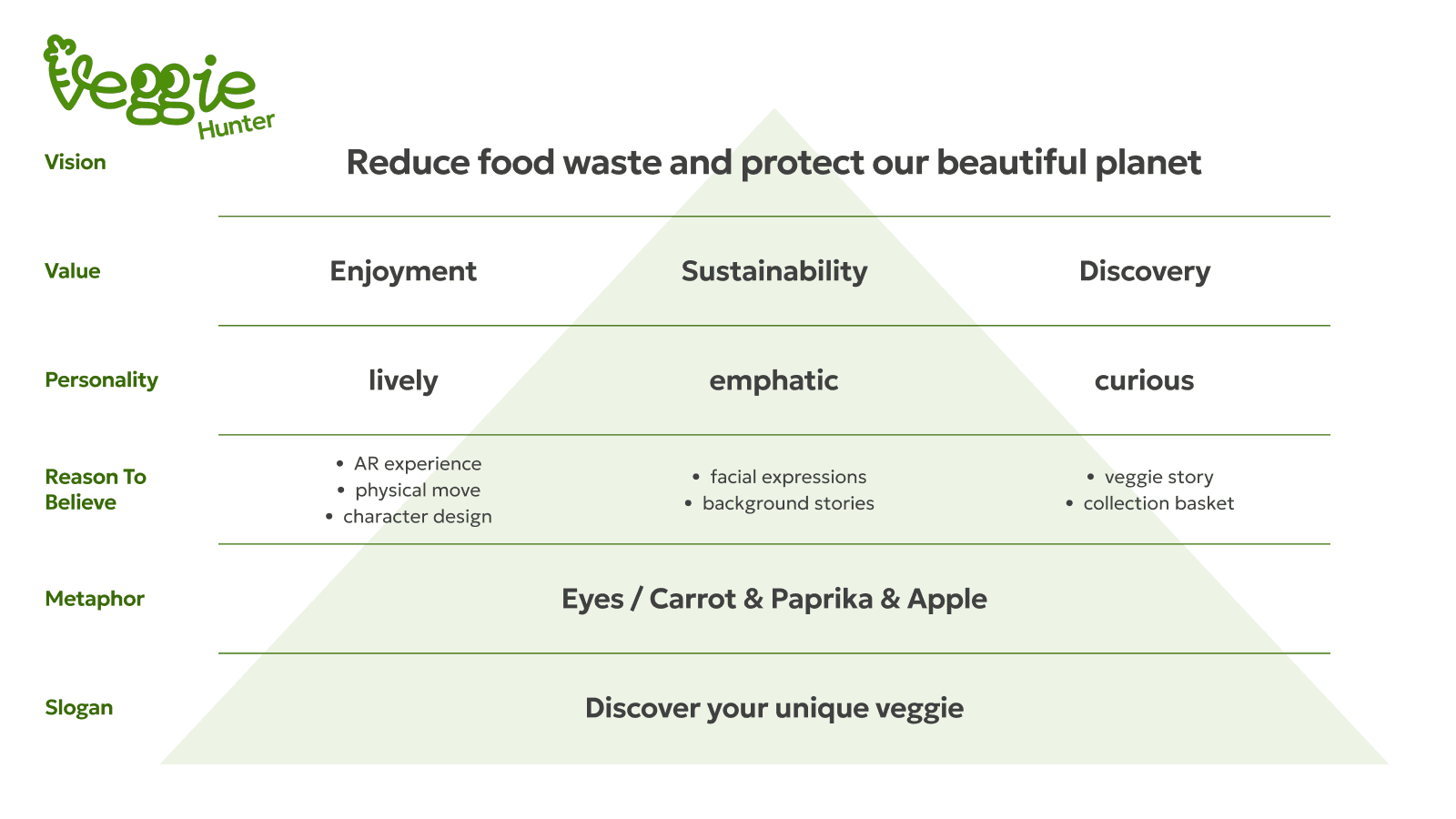
The central tension I had to resolve: how do you make sustainability feel exciting rather than obligatory? I built the Brand House from scratch — defining core pillars, tone of voice, and the full visual identity system. The "Hunter" metaphor unified two opposing feelings: the reliability of sustainable produce and the thrill of discovery.
Information Architecture
Structure before aesthetics.
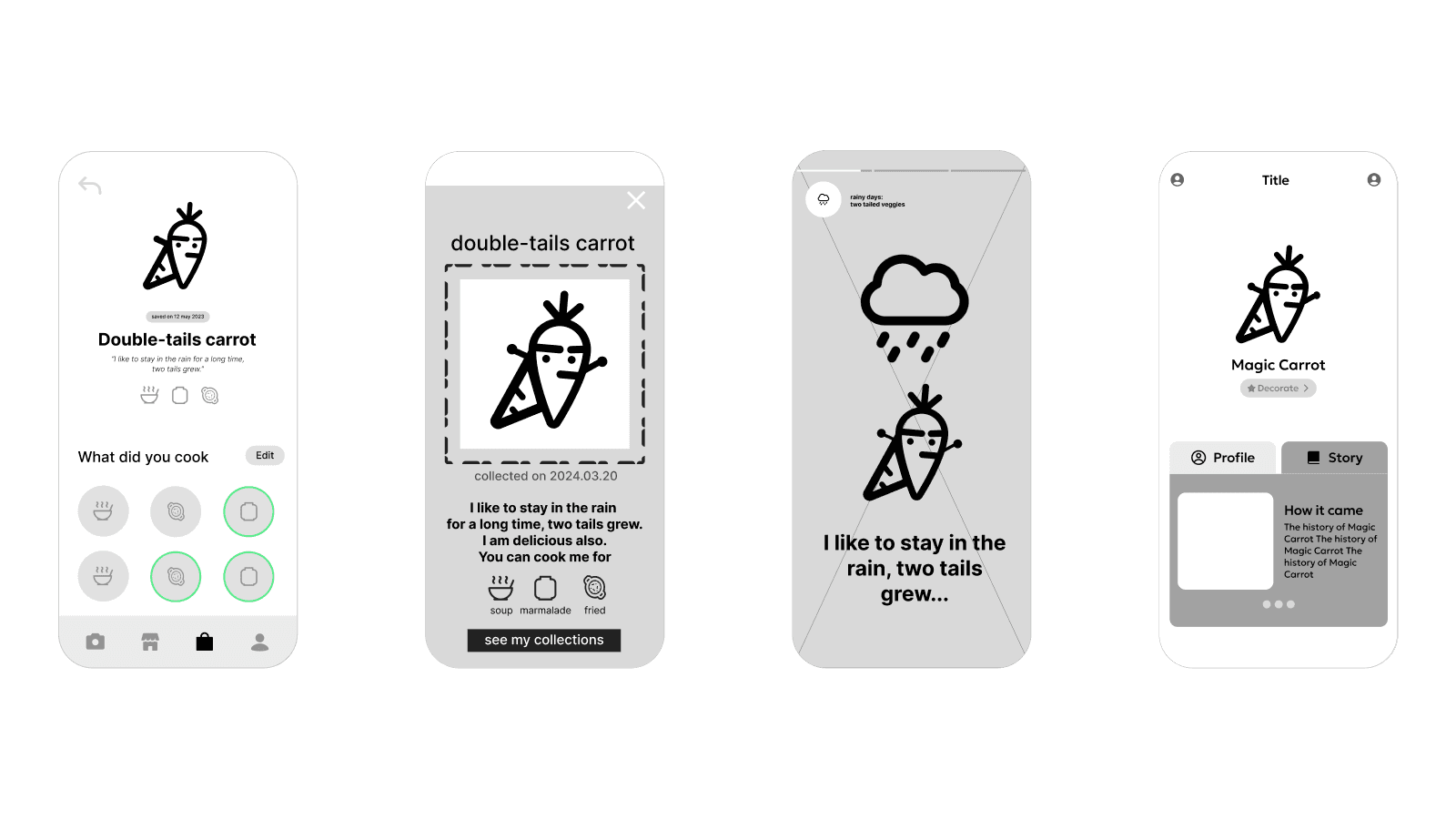
The most technically complex UX challenge in this project was the filtering system — users needed to search by produce type, imperfection level, and location simultaneously. I developed multiple wireframe iterations to stress-test content hierarchy and filter logic. Each version was evaluated against research findings before moving forward.
UI Design
From structure to screen.
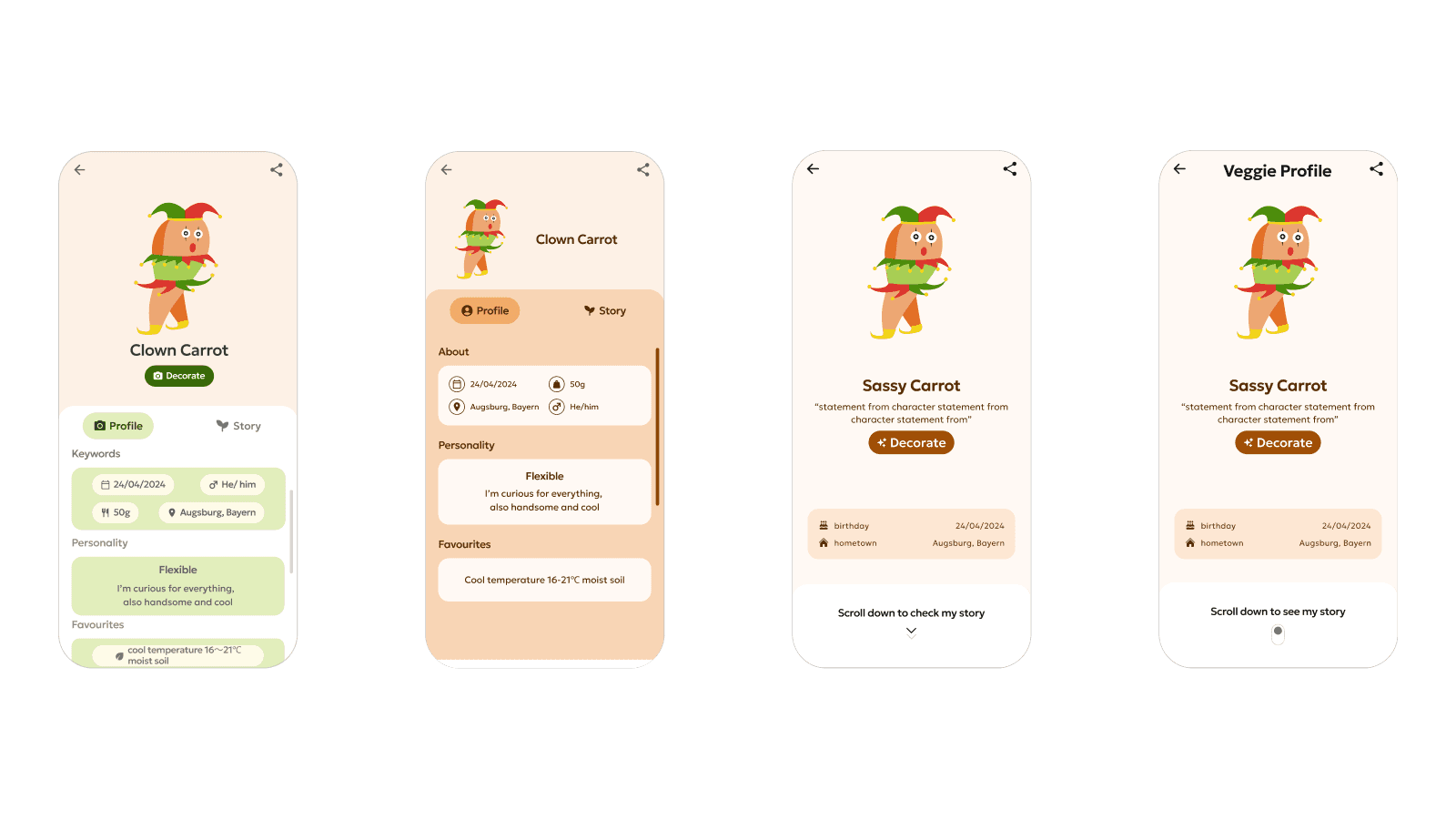
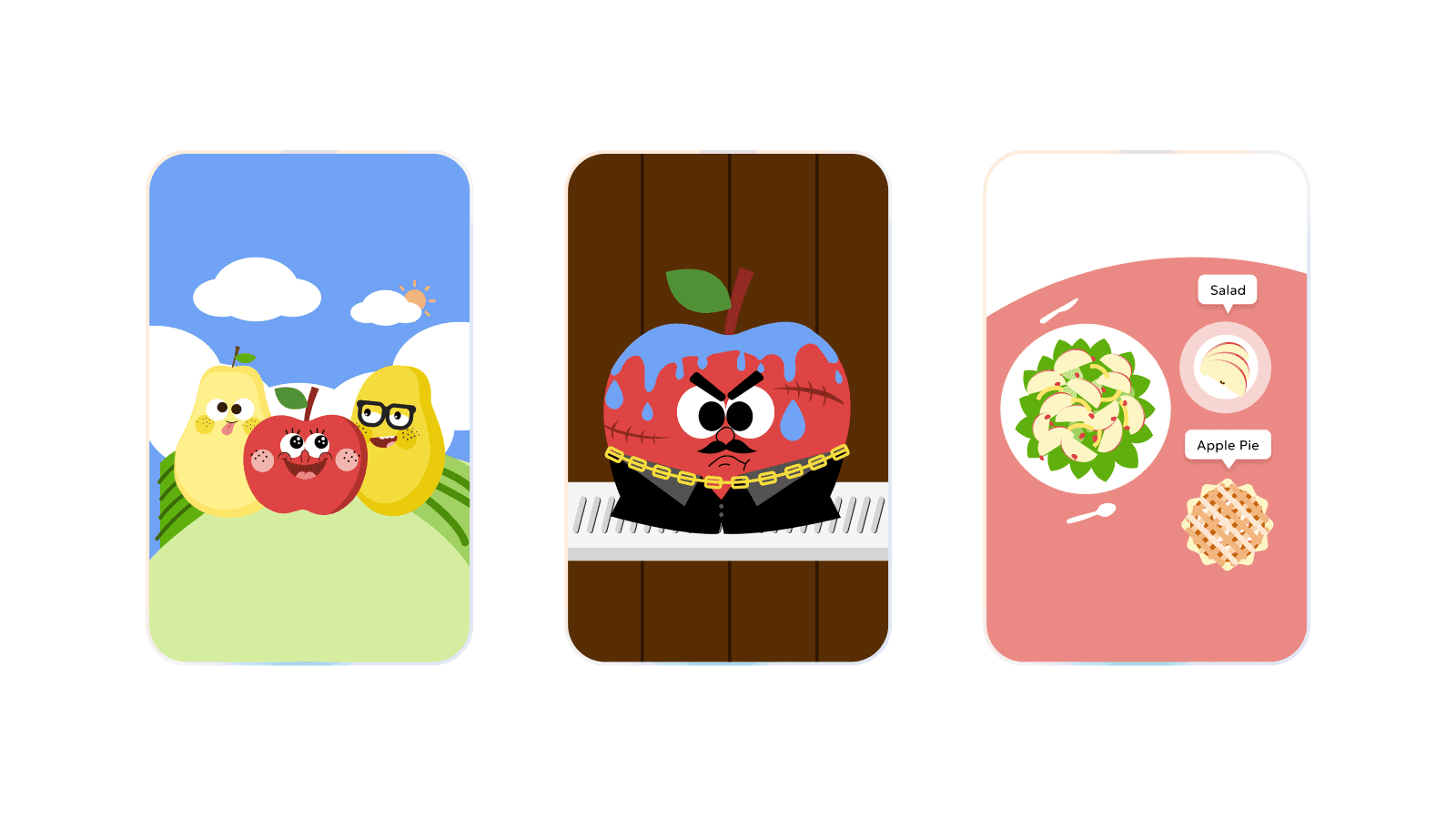
Working within the team's shared design system, I translated the validated IA into high-fidelity screens — ensuring every interaction reflected the brand personality, and every layout honored the hierarchy proven through research. I also contributed original illustrations using Procreate and Figma, bringing a hand-crafted warmth to the digital experience.
Outcomes
Results that speak for themselves.
My Contribution
Reflection
This project pushed me well beyond screen design.
Expanded Full UX Skillset
I operated across the full UX spectrum simultaneously — conducting user research, defining brand strategy, mapping information architecture, and delivering high-fidelity UI within a single project lifecycle.
Evidence over instinct.
My biggest shift was learning to silence personal aesthetic preferences and let user data lead. When research contradicted my initial assumptions, I rebuilt — and the product was better for it.
Design as a system, not a sequence.
Leading across research, brand, and UI in one project showed me how these disciplines strengthen each other when treated as one continuous conversation — not separate handoffs.
Collaboration amplifies output.
Working in an agile team via Kanban taught me that good design process is also good communication.